Call us now :08071779312
 Send Inquiry
 Send Inquiry
Hydraulic Goods Lift
MOQ : 1 Unit
Hydraulic Goods Lift Specification
- Motor Power
- 3 HP - 7.5 HP (depending on capacity)
- Control System
- Push Button/Remote
- Platform Material
- MS Chequered Plate
- Installation
- Indoor/Outdoor
- Lifting Height
- Up to 30 meters
- Finishing
- Powder Coated or Painted
- Door Type
- Manual or Automatic
- Safety Features
- Overload Protection, Emergency Stop, Limit Switches
- Usage/Application
- Warehouse, Industrial, Commercial Buildings
- Lift Speed
- 6-9 meter/minute
Hydraulic Goods Lift Trade Information
- Minimum Order Quantity
- 1 Unit
- Payment Terms
- Cash in Advance (CID)
- Supply Ability
- 50 Units Per Month
- Main Domestic Market
- All India
Hydraulic Goods Lift About
The Hydraulic Food Lift is a vertical material handling system designed to safely and efficiently move food trays, containers, or raw materials between different floors. Built using food-grade stainless steel and a robust hydraulic mechanism, this lift is ideal for kitchens, hotels, restaurants, bakeries, and food processing units.
It offers silent operation, easy control, and hygienic transport, ensuring compliance with industry food safety standards. Available in various load capacities and platform sizes, this lift is customized based on customer needs.
FAQs of Hydraulic Food Lift:
Q: What is the main use of a hydraulic food lift?
A: It is used to transport food items, trays, or supplies vertically between floors without manual handling.
Q: Is the lift safe for carrying cooked food or raw materials?
A: Yes, it uses food-grade stainless steel (SS304), which is hygienic and corrosion-resistant.
Q: Can it be customized for small kitchens or restaurants?
A: Yes, the size, load capacity, and height can be tailored to your available space.
Q: How many floors can it cover?
A: It can cover 2 to 5 floors or up to 10 meters of vertical height.
Q: Is installation included?
A: Installation can be provided on-site by the manufacturer or supplier (as per agreement).
Q: What is the maintenance requirement?
A: Minimal periodic oil checks, cleaning of hydraulic unit, and safety inspection every few months.
Advanced Safety and Reliability
Safety is paramount in our hydraulic goods lifts. Each unit features integrated systems such as overload protection, emergency stop mechanisms, and limit switches, ensuring safe handling of goods and minimizing operational risks. The high structural integrity of mild steel construction further boosts reliability, making these lifts suitable for continuous use in demanding environments.
Customized Solutions for Every Requirement
Our goods lifts are fully customizable in terms of dimensions, platform size, and capacity, offering seamless integration into new or existing facilities. Whether your application requires indoor or outdoor installation, or specific control preferences such as push-button panels or remote operation, our lifts are tailored to your precise needs.
FAQs of Hydraulic Goods Lift:
Q: How does the hydraulic goods lift ensure safe operation during heavy use?
A: The hydraulic goods lift is equipped with essential safety features such as overload protection, emergency stop buttons, and limit switches. These mechanisms work together to prevent accidents and ensure the lift does not operate beyond its specified capacity, making it dependable in high-demand environments.Q: What applications are suitable for the hydraulic goods lift?
A: This lift is designed for use in warehouses, industrial settings, and commercial buildings. Its robust construction and variable lifting height make it ideal for transporting goods efficiently between floors or storage areas, both indoors and outdoors.Q: What is the installation process for the hydraulic goods lift?
A: Installation depends on the required configuration and building structure. We offer both indoor and outdoor installations, customizing the lifts size and features to fit your site. Typically, installation is managed by our experienced technicians ensuring all safety standards are met.Q: How is the lift controlled and operated?
A: The lift can be operated via a push-button panel or remote control, based on user preference. This flexibility ensures ease of use and aligns with various operational workflows, improving efficiency and reducing manual handling.Q: Where can the lift be installed, and does it support outdoor usage?
A: Our hydraulic goods lift is engineered for both indoor and outdoor installations. Its durable, powder-coated or painted finish, combined with weather-resistant materials, makes it suitable for different environmental conditions throughout industrial and commercial premises.Q: What are the primary benefits of using a hydraulic goods lift in my facility?
A: The primary advantages include increased operational efficiency, reduced labor for material handling, enhanced safety due to integrated protection systems, and the ability to customize the lifts capacity and size to meet specific needs, all while ensuring robust and reliable performance.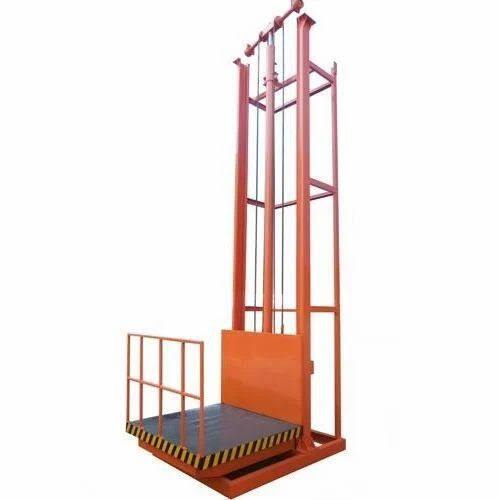
Tell us about your requirement

Price:
Quantity
Select Unit
- 50
- 100
- 200
- 250
- 500
- 1000+
Additional detail
Mobile number
Email


 Send Inquiry
Our Products
- Industrial Conveyor
- Metal Detector
- Magnetic Separator
- Industrial Dryers
- Powder Coating Oven
- Bucket Elevator
- Conveyor Belt
- Baking Oven
- Soya Chunk Line
- Hot Melt Coating Machine
- Industrial Oven
- Bowl Feeder
- Conveyorised Powder Coating Oven
- Rotary Valve
- Roll Coating Machine
- Impregnation Plant
- Infrared Heater
- Belt Jointing Machine
- Heating Mantles
- Industrial Cooling Systems
- Industrial Furnace
- Lifting Magnet
- Packaging Machine
- Shrink Wrap Machine
- Suspension Magnet
- Vacuum Lifter
- Weigher Machine
- X-Ray Machine
- Goods Lift
- Scissors Lift
- Jib Crane


Shree Krupa Chembers Opp MTNL Office Near Mhalhar Talkies, 3rd Floor, Room No 304, Thane,Thane - 400604, Maharashtra, India

Mr K M Hegade
(Proprietor)
Mobile :08071779312
 Send Inquiry
 Call Me Free
Developed and Managed by Infocom Network Private Limited.


 English
 Spanish
 French
 German
 Italian
 Chinese (Simplified)
 Japanese
 Korean
 Arabic
 Portuguese